


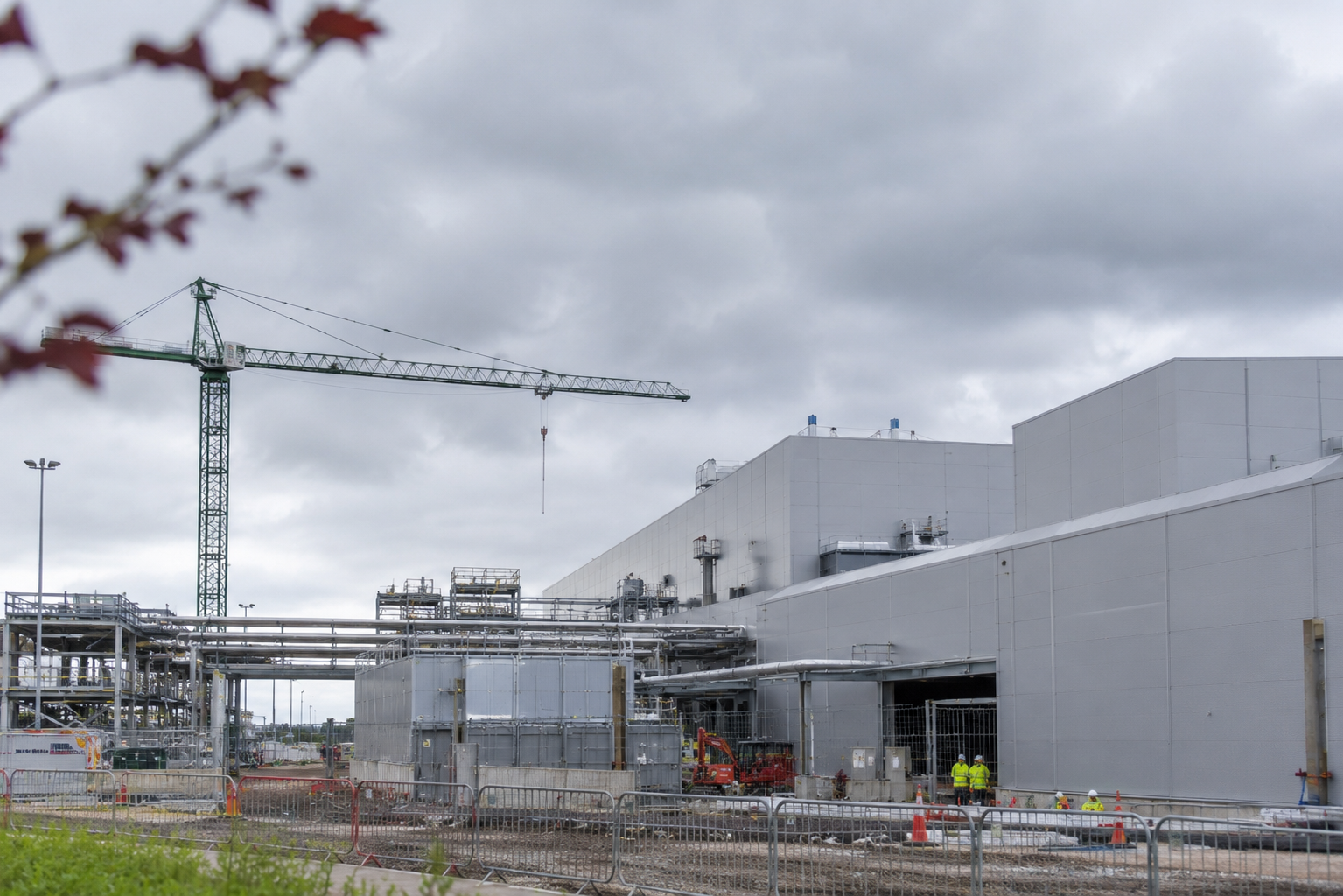
In 1989, Intel chose a site in Leixlip, Co. Kildare, for its European manufacturing operations. Few could have predicted just how much that decision would influence Ireland's industrial future.
Over the following decade, multinational investment helped transform Ireland into a major European location for technology, pharmaceuticals and manufacturing.
New factories were built, international companies expanded their operations, and demand grew for the engineers, construction professionals and specialist contractors needed to deliver increasingly complex industrial facilities.
More than 35 years later, Ireland finds itself at another interesting point in its industrial development.
Billions of euro are being invested in semiconductor manufacturing, pharmaceutical production, automation and advanced technology. Some of these projects involve entirely new facilities. Others are transforming industrial sites that have been operating for decades.
And while the headlines tend to focus on investment figures and the number of permanent jobs being created, there is another side to the story.
What does this next generation of manufacturing mean for Ireland's construction industry, and could the changes ahead be as significant as those experienced during the 1990s?
How the 1990s Changed Ireland's Industrial Landscape
Ireland's relationship with multinational manufacturing didn't begin in the 1990s.
Companies such as Pfizer, Apple and several major pharmaceutical manufacturers had already established operations here during the preceding decades.
However, the late 1980s and 1990s marked an important turning point.
Intel's arrival in 1989 was followed by significant investment in semiconductor manufacturing at Leixlip. Dell established operations in Limerick in 1990, while other international technology companies continued expanding their presence in Ireland.
The country was becoming increasingly attractive to businesses looking for a European manufacturing base.
But these investments were about more than bringing international companies into Ireland.
They created demand for industrial buildings, specialist infrastructure, manufacturing equipment and an increasingly skilled workforce.
Construction companies that had traditionally worked on commercial buildings, housing or conventional industrial facilities were presented with opportunities to become involved in more technically demanding projects.
Semiconductor manufacturing facilities, for example, required exceptionally controlled environments, extensive mechanical and electrical infrastructure and complex installation processes.
Ireland wasn't simply building more factories. It was developing the experience needed to construct some of the most technically demanding facilities in the world.
That experience would become increasingly valuable in the decades that followed.
The Next Industrial Shift Is Already Taking Shape
Fast-forward to today, and multinational manufacturing remains one of Ireland's most important economic activities.
According to IDA Ireland's 2025 annual results, the agency secured 323 investments associated with the expected creation of more than 15,000 jobs.
Employment across IDA client companies reached 312,468, while businesses committed a record €2.5 billion to research and development projects.
Perhaps more interesting than the number of investments, however, is where that money is going.
Ireland is no longer competing solely to attract manufacturing operations.
It is also competing to secure investment in advanced production technologies, artificial intelligence, semiconductor development, automated manufacturing and more sustainable industrial processes.
For construction professionals, that distinction matters.
A manufacturing facility designed around advanced robotics, automated production and highly controlled environments can involve very different engineering requirements from a more conventional industrial building.
The investment might still be described as a factory expansion, but the construction and engineering work behind it can be considerably more complicated.
And several major projects already demonstrate how this change is taking place.
Three Investments That Show How Irish Manufacturing Is Changing
1. Intel, Leixlip: From the Original Investment to the Next Generation of Chips
Intel is perhaps the clearest example of how Ireland's industrial landscape has evolved.
Having first established its Irish operations in 1989, the company has invested more than €30 billion in the country.
Its Fab 34 development represented a €17 billion investment in advanced semiconductor manufacturing, significantly increasing the manufacturing capacity available at Leixlip.
Then, in July 2026, Intel announced a further €5 billion investment in its Irish operations.
The investment is intended to upgrade existing manufacturing facilities and install equipment to support the production of next-generation chips, driven partly by growing demand for artificial intelligence and high-performance computing.
What makes this particularly interesting from a construction perspective is that the latest investment is not centred on building an entirely new factory.
Instead, the focus is on upgrading existing facilities to accommodate new manufacturing technologies.
This introduces a different type of construction challenge.
Working within an established industrial campus can involve coordinating complex mechanical and electrical installations, equipment upgrades and commissioning activities around existing infrastructure.
It demonstrates how future industrial investment may increasingly involve transforming existing facilities rather than simply constructing new ones.
2. Eli Lilly, Limerick: A New Generation of Pharmaceutical Manufacturing
Pharmaceutical manufacturing has been a major part of Ireland's industrial economy for decades, but the facilities being developed today are becoming increasingly sophisticated.
Eli Lilly's manufacturing development in Limerick provides a useful example.
The company has committed approximately $2 billion to the site, which is designed to become one of its most advanced manufacturing facilities.
The development incorporates automated systems, digital manufacturing technology and advanced data management capabilities.
According to Lilly, the project has supported approximately 1,200 construction jobs and is expected to create 450 permanent positions once fully operational.
For construction and engineering professionals, the significance extends beyond the scale of the investment.
Modern pharmaceutical facilities require extensive process engineering, mechanical and electrical installations, cleanroom environments, utilities infrastructure and carefully coordinated commissioning programmes.
There is also the challenge of bringing different systems together so that the facility operates reliably and meets strict manufacturing requirements.
The construction phase is therefore only one part of a much larger process.
The successful installation, testing and commissioning of equipment can be just as important as the physical building itself.
3. Analog Devices, Limerick: Manufacturing, Research and Technology Under One Roof
Another development worth examining is Analog Devices' investment in Limerick.
In 2023, the company announced a €630 million investment at its Raheen campus, involving a new research, development and manufacturing facility.
The project was associated with plans to create 600 jobs over five years, alongside an estimated 520 jobs during construction.
What makes this investment notable is the combination of advanced manufacturing and research activity.
Rather than separating the development of new technology from its production, facilities of this kind bring multiple specialist functions together.
That creates requirements for flexible industrial spaces, sophisticated building services, reliable electrical infrastructure and environments capable of supporting highly sensitive equipment.
For the Irish construction industry, projects like this highlight the increasing overlap between industrial construction, engineering and advanced technology.
The buildings themselves are becoming an integral part of how manufacturers develop and produce their products.
Why This Period Could Be Different From the 1990s
There is an important distinction between the industrial growth Ireland experienced during the 1990s and the investments taking place today.
During the earlier period, much of the attention was on attracting multinational companies and establishing major manufacturing operations.
Today, Ireland already has a substantial industrial base.
The challenge is increasingly about keeping those facilities competitive as technology, manufacturing processes and international demand change.
That means the next phase of industrial development may not always be immediately visible.
A major investment could involve upgrading an existing production line, installing automated systems, expanding cleanroom capacity or replacing critical mechanical and electrical infrastructure.
From outside the site, very little might appear to have changed.
Inside, however, the facility could be undergoing a substantial technological transformation.
This is particularly relevant for construction professionals because the opportunities created by industrial investment are not necessarily limited to new-build projects.
Refurbishment, plant upgrades, specialist installations and commissioning can all form part of the investment cycle.
The next major period of industrial construction in Ireland may be as much about what happens inside existing buildings as the new facilities appearing on the skyline.
What Does This Mean for Ireland's Construction Industry?
The most immediate impact of major industrial investment is usually associated with construction activity.
Large pharmaceutical, semiconductor and advanced manufacturing developments can require substantial civil engineering, structural, mechanical and electrical work.
However, as facilities become more technologically advanced, the expertise required to deliver them is also changing.
Consider the difference between constructing a conventional industrial warehouse and delivering a pharmaceutical manufacturing facility with highly automated production systems.
Both require strong construction management, but the second introduces additional layers of complexity.
There may be specialist process utilities, strict environmental controls, sophisticated electrical distribution systems and extensive testing requirements before production can begin.
This places greater importance on coordination between the construction team, specialist subcontractors, equipment suppliers and the manufacturer's operational teams.
It also creates opportunities for professionals with experience across several disciplines.
Mechanical and electrical engineers who understand complex industrial systems, for example, may find their experience relevant to a broader range of projects.
Similarly, project managers, quantity surveyors and site managers with experience delivering technically demanding facilities may be well positioned to work across pharmaceutical, semiconductor and other advanced manufacturing developments.
The underlying construction skills remain important.
What changes is the environment in which those skills are being applied.
Could Automation Change the Type of Construction Jobs in Demand?
When automation is discussed, much of the conversation centres on whether technology will replace jobs.
For the construction industry, there is another question worth considering.
What happens to construction and engineering roles when the facilities being built become more automated?
An automated manufacturing facility still needs to be designed, constructed, fitted out, tested and maintained.
In many cases, automation introduces additional systems that need to be integrated into the wider building.
This can increase the importance of specialist electrical installations, control systems, instrumentation, process engineering and commissioning.
It may also place greater demands on the professionals responsible for coordinating those activities.
For example, a commissioning engineer working on a highly automated pharmaceutical facility may need to understand how multiple systems interact, rather than assessing individual pieces of equipment in isolation.
An electrical project manager may be coordinating installations that must meet demanding reliability and operational requirements.
And a mechanical engineer may be working with specialist process utilities that are essential to the manufacturer's production activities.
This doesn't necessarily mean every construction role will become more technical, or that automation will automatically create more jobs.
It does suggest that experience in complex industrial environments could become increasingly relevant as manufacturers continue upgrading their facilities.
The Opportunity Isn't Limited to the Biggest Multinationals
When discussing industrial investment in Ireland, attention naturally turns to companies such as Intel, Eli Lilly and Analog Devices.
But the construction activity associated with these developments extends beyond the companies making the original investment.
Major industrial projects rely on networks of main contractors, specialist subcontractors, engineering consultancies, equipment suppliers and local businesses.
A pharmaceutical expansion might involve one contractor delivering the main building, several specialist firms installing mechanical and electrical systems, and others responsible for cleanroom construction, process equipment or commissioning.
These projects can also provide Irish contractors with opportunities to develop specialist expertise.
Experience gained on one technically demanding manufacturing facility can be valuable when tendering for similar work elsewhere.
Over time, this can help contractors build a track record in sectors where technical capability, quality and delivery experience are particularly important.
The significance of industrial investment therefore extends beyond the immediate construction programme.
It can influence the types of projects Irish contractors are capable of delivering in the future.
What Could Hold Ireland's Next Industrial Expansion Back?
There are reasons to be optimistic about Ireland's advanced manufacturing sector, but continued investment cannot be taken for granted.
Major industrial developments depend on more than the willingness of multinational companies to spend money.
They require access to electricity, water, transport infrastructure, suitable development sites and a workforce capable of delivering and operating the facilities.
For energy-intensive industries such as semiconductor manufacturing, the availability and reliability of electricity infrastructure are particularly important.
Planning requirements, construction costs, global competition and the availability of specialist engineering skills can also influence investment decisions.
And while large investment announcements attract attention, they don't always translate into immediate construction activity.
Projects can be delivered in phases, revised or delayed as companies respond to market conditions.
The wider global picture matters too.
International manufacturers are making investment decisions in an environment shaped by trade policy, supply-chain pressures, technological competition and changing demand.
Ireland may be well positioned in several advanced manufacturing sectors, but maintaining that position will require continued investment in the infrastructure and skills that support them.
What Should Construction Professionals Be Paying Attention To?
For anyone working in Irish construction, the interesting question isn't simply how many new factories will be built over the coming years.
It's what type of work those factories, and the existing facilities being upgraded, will require.
A Site Engineer who has spent years working on conventional construction projects may begin seeing opportunities on pharmaceutical or semiconductor developments.
A Quantity Surveyor with industrial experience may find themselves working on projects where specialist equipment, complex building services and commissioning programmes represent a substantial proportion of the overall investment.
Mechanical and Electrical Engineers may encounter greater demand for experience with automated manufacturing systems, process utilities and technically demanding installations.
And for construction professionals already working in these sectors, the experience they are gaining today could be valuable across a wider range of future projects.
That doesn't mean everyone needs to move into pharmaceutical or semiconductor construction.
But understanding how Ireland's industrial base is changing could help professionals make more informed decisions about the projects, employers and experience they pursue.
So, Is Ireland Entering Its Biggest Industrial Transformation Since the 1990s?
It's too early to say whether the current period will match the economic and industrial changes Ireland experienced during the 1990s.
The circumstances are different, and today's investment announcements cannot be compared directly with the long-term impact of that earlier period.
But there are similarities worth paying attention to.
In the 1990s, multinational investment helped Ireland establish itself as an important location for technology and advanced manufacturing.
Today, many of those same industries are investing in the next generation of production facilities, equipment and technology.
The difference is that Ireland is no longer starting from the same position.
It already has decades of manufacturing experience, specialist contractors, engineering expertise and established industrial campuses.
The opportunity now is to build on that foundation.
For the construction industry, this could mean continued demand for technically demanding projects, more complex mechanical and electrical installations, and greater opportunities for professionals with specialist industrial experience.
The 1990s helped establish Ireland as a place where global manufacturers wanted to operate. The question now is whether the next generation of investment will establish Ireland as one of the places where they want to develop their most advanced operations.
And for the construction professionals responsible for delivering those facilities, that is a development worth watching.
At Breagh Recruitment, we work with construction and engineering professionals across Ireland, including those involved in pharmaceutical, industrial, mechanical and electrical projects. If you're considering your next opportunity or want to understand what projects are available, explore our latest construction and engineering jobs.
Get in Touch
Want to find out how we can help your business grow? Get in touch with us by sending a message through this form!Related Articles
119 Irish Regeneration Projects: Where Regional Construction Demand Could Grow Next
When people talk about the next wave of construction in Ireland, attention usually goes to the same places. Housing. Dublin. Data centres. Pharmaceutical projects. Major infrastructure. But one of the...
 Cathal McKeever

3 Must-Ask Questions to End Your Construction Interview
3 Must-Ask Questions to End Your Construction Interview When it comes to construction interviews, most candidates spend all their time preparing to answer tough questions. While that’s important...
Cathal McKeever
Are Construction Professionals Expected to Sacrifice Too Much?
Are Construction Professionals Expected to Sacrifice Too Much? Long hours. Long commutes. Constant pressure. Time away from family. ...
 Fionn Mac Néill

Are Data Centres the Golden Ticket? The Truth Behind Ireland's Most Talked-About Construction Sector
Are Data Centres the Golden Ticket? Walk into almost any construction site canteen, recruitment office, or industry event in Ireland today, and you'll hear the same conversation. ...
 Ryan Kieran

Are Your Construction Skills More Valuable Than You Think?
You'd Likely Be in Strong Demand Right Now When was the last time you stopped to think about your career? For most construction professionals, the answer is probably "not recently." Betwe...
 Stephen Nugent

Balancing Commute, Site Location & Career Growth in Ireland: Are You Optimising Your Construction Career?
The Decision That Can Shape Your Entire Construction Career It's Monday morning. Your alarm goes off at 5:15am. By 6am you're on the M50, heading towards a project that's over 90 minutes away. You tel...
Stephen Nugent
Breagh Recruitment: 10 Years in Construction Recruitment
Breagh Recruitment: 10 Years in ConstructionRecruitment – My Journey This October 2025, Breagh Recruitment turns ten and I couldn’t be prouder. But our story started long before the f...
Cathal McKeever
Breagh Recruitment 2025: A Year of Growth, Grit and Milestones
Breagh Recruitment 2025: A Year of Growth, Grit and Milestones As 2025 comes to a close, it’s a natural time to pause, reflect, and take stock of just how far Breagh Recruitment has come not jus...
Cathal McKeever
Breagh Recruitment Celebrates Excellence at the Irish Construction Industry Awards 2025
Breagh Recruitment had the privilege of attending the Irish Construction Industry Awards 2025 at the Convention Centre Dublin. It was a memorable even...
Cathal McKeever
Built by Humans, Run by Robots: The Engineering Wonder That Is Yangshan Port
Built by Humans, Run by Robots: The Engineering Wonder That Is Yangshan Port At Breagh, we live and breathe construction and engineering. But every now and then, we come across a project that makes ev...
Cathal McKeever
