



From Site to Screen: Is Hybrid Working the Future of Work-Life Balance in Irish Construction?
For years, “hybrid working” felt like something reserved for tech companies and office jobs.
Construction? Not a chance.
Or at least, that’s what most people thought.
But across Ireland, the conversation is starting to shift. Between evolving project delivery methods, digital tools, and the rise of Modern Methods of Construction (MMC), a new reality is emerging:
Hybrid working in construction is no longer impossible. It is already happening.
Why Work-Life Balance Has Become a Priority in Construction
The traditional construction lifestyle is demanding. There is no getting around it.
- Early starts
- Long commutes
- Extended site hours
- Limited flexibility
For many professionals, especially those with families or long travel times, it is becoming harder to sustain long term.
And the industry is feeling it.
More candidates in Ireland are now asking:
- Can I work from home even one day a week?
- Is there flexibility in this role?
- What does work-life balance actually look like here?
This shift is not a trend. It is a change in expectations.
So Is Hybrid Working Actually Possible in Construction?
Short answer: yes, but it depends on the role.
Not every job in construction can be hybrid. Site presence will always be essential for certain positions.
But many roles are already evolving into partly remote, partly on-site positions, including:
- Quantity Surveyors
- Design Engineers
- Project Managers
- Planning Engineers
- M&E Coordinators
These roles often involve:
- Reporting
- Coordination
- Procurement
- Meetings
- Design reviews
And increasingly, these tasks do not always need to happen on-site.
How MMC Is Driving Hybrid Opportunities
This is where Modern Methods of Construction (MMC) really changes things.
Because so much of the work is moved off-site into controlled environments, it creates:
- More structured workflows
- Greater reliance on digital coordination
- Earlier design-stage involvement
- Fewer last-minute site disruptions
This opens the door to something new:
Work that can be done remotely for part of the week
From Physical to Digital Collaboration
With MMC projects, teams are:
- Coordinating designs before manufacturing
- Managing production timelines digitally
- Using BIM to track progress
This means professionals can:
- Work from home on planning, reporting, or coordination days
- Attend site or factory when needed
- Balance both environments
What Hybrid Construction Roles Actually Look Like
Hybrid does not mean fully remote. It means flexibility.
A typical hybrid week might look like:
- 2 to 3 days on-site or in a factory
- 1 to 2 days working from home
- Remote meetings, planning, and admin tasks completed off-site
For many, that is the difference between:
- A 2-hour daily commute or none
- Missing family time or being home for it
It is not about doing less work. It is about working smarter.
The Benefits: Why Professionals Are Making the Switch
Those already in hybrid-friendly roles are seeing real improvements in:
1. Time Back in Their Day
Less commuting means more personal time.
2. Reduced Burnout
Fewer long days on-site and more control over schedules.
3. Better Focus
Planning and reporting are often easier away from site distractions.
4. Improved Job Satisfaction
A better balance between career and personal life.
Why Employers Are Starting to Offer Hybrid Options
This is not just driven by candidates. Companies are adapting too.
Forward-thinking contractors and developers in Ireland are recognising that:
Flexibility helps attract and retain top talent
With ongoing skills shortages across construction:
- Offering hybrid working sets companies apart
- It broadens the talent pool
- It improves long-term retention
With MMC projects increasing, the structure to support hybrid roles is now in place.
The Limits: Where Hybrid Does Not Work Yet
It is important to stay realistic.
Roles that are still heavily site-dependent include:
- Site Managers
- Forepersons
- Skilled Trades
- Groundworks teams
These roles require daily physical presence and likely always will.
However, improvements in planning, scheduling, and shift structures are helping to ease workload pressures.
How to Move Into a Hybrid-Friendly Role
If better work-life balance is your goal, here are a few steps to consider:
1. Target the Right Roles
Look for positions with strong planning, coordination, or design elements.
2. Upskill in Digital Tools
Experience with BIM, project management software, and digital reporting tools will make you more competitive.
3. Ask the Question
Many roles offer flexibility, even if it is not clearly advertised.
The Bigger Picture: A Changing Industry
Construction in Ireland is evolving, not just in how projects are built, but in how people work.
Hybrid roles, MMC, and digital collaboration are all part of a wider shift towards:
- More sustainable careers
- Better working conditions
- A more modern industry
Final Thoughts: Is Hybrid the Future of Construction?
Not entirely, but it is becoming an important part of it.
The traditional long-hour, fully site-based week is no longer the only option.
For many professionals, the future looks more like:
- A mix of site, office, and home
- Greater flexibility
- A better balance between work and life
For an industry known for long hours, this is a meaningful step forward.
Thinking About a More Flexible Role?
If you are working in construction in Ireland and thinking about:
- Reducing your commute
- Gaining flexibility
- Improving your work-life balance
You are not alone. The opportunities are growing.
Get in Touch
Want to find out how we can help your business grow? Get in touch with us by sending a message through this form!Related Articles
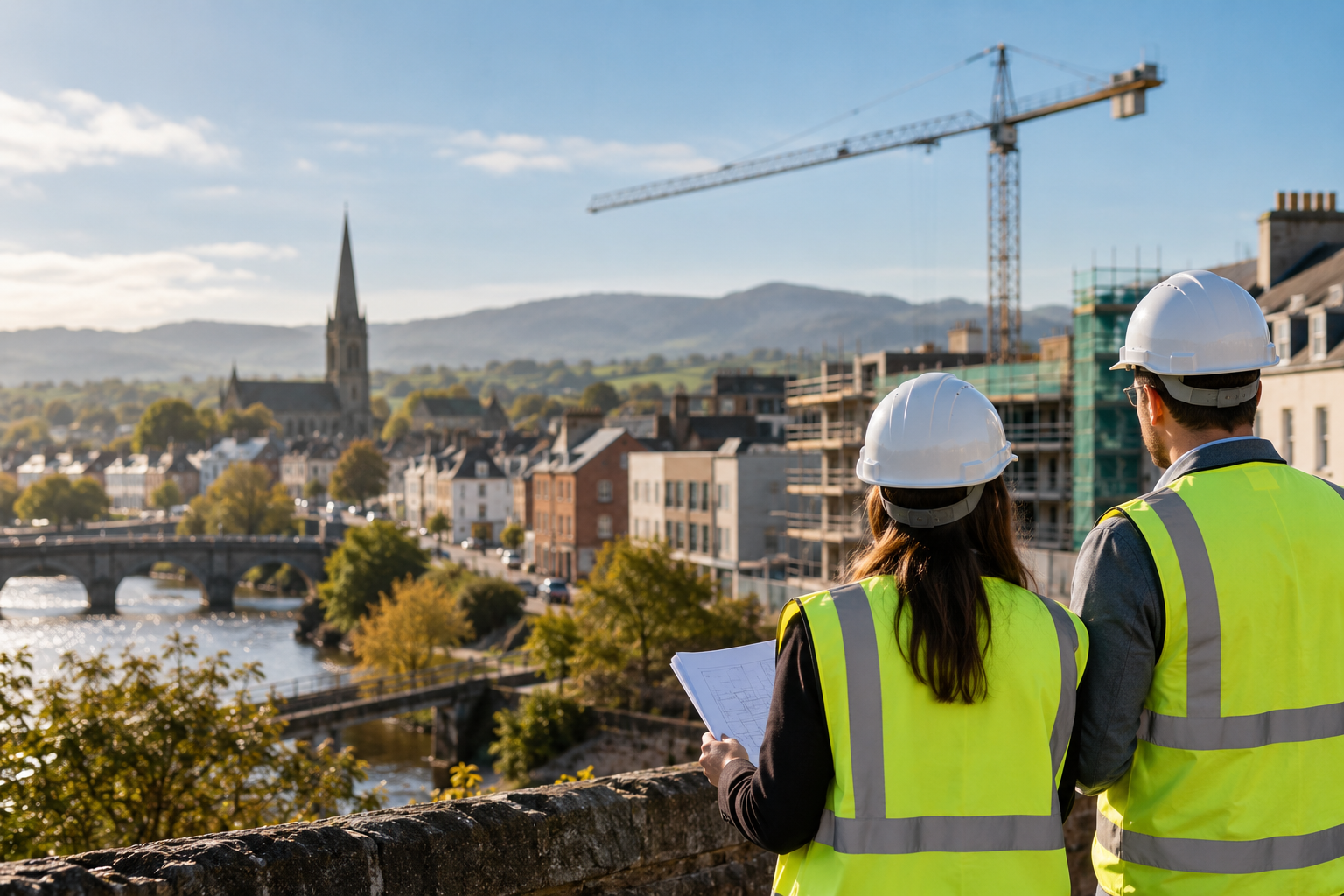
119 Irish Regeneration Projects: Where Regional Construction Demand Could Grow Next
When people talk about the next wave of construction in Ireland, attention usually goes to the same places. Housing. Dublin. Data centres. Pharmaceutical projects. Major infrastructure. But one of the...
 Cathal McKeever
3 Must-Ask Questions to End Your Construction Interview
3 Must-Ask Questions to End Your Construction Interview When it comes to construction interviews, most candidates spend all their time preparing to answer tough questions. While that’s important...
Cathal McKeever
Are Construction Professionals Expected to Sacrifice Too Much?
Are Construction Professionals Expected to Sacrifice Too Much? Long hours. Long commutes. Constant pressure. Time away from family. ...
 Fionn Mac Néill
Are Data Centres the Golden Ticket? The Truth Behind Ireland's Most Talked-About Construction Sector
Are Data Centres the Golden Ticket? Walk into almost any construction site canteen, recruitment office, or industry event in Ireland today, and you'll hear the same conversation. ...
 Ryan Kieran
Are Your Construction Skills More Valuable Than You Think?
You'd Likely Be in Strong Demand Right Now When was the last time you stopped to think about your career? For most construction professionals, the answer is probably "not recently." Betwe...
 Stephen Nugent
Balancing Commute, Site Location & Career Growth in Ireland: Are You Optimising Your Construction Career?
The Decision That Can Shape Your Entire Construction Career It's Monday morning. Your alarm goes off at 5:15am. By 6am you're on the M50, heading towards a project that's over 90 minutes away. You tel...
Stephen Nugent
Breagh Recruitment: 10 Years in Construction Recruitment
Breagh Recruitment: 10 Years in ConstructionRecruitment – My Journey This October 2025, Breagh Recruitment turns ten and I couldn’t be prouder. But our story started long before the f...
Cathal McKeever
Breagh Recruitment 2025: A Year of Growth, Grit and Milestones
Breagh Recruitment 2025: A Year of Growth, Grit and Milestones As 2025 comes to a close, it’s a natural time to pause, reflect, and take stock of just how far Breagh Recruitment has come not jus...
Cathal McKeever
Breagh Recruitment Celebrates Excellence at the Irish Construction Industry Awards 2025
Breagh Recruitment had the privilege of attending the Irish Construction Industry Awards 2025 at the Convention Centre Dublin. It was a memorable even...
Cathal McKeever
Built by Humans, Run by Robots: The Engineering Wonder That Is Yangshan Port
Built by Humans, Run by Robots: The Engineering Wonder That Is Yangshan Port At Breagh, we live and breathe construction and engineering. But every now and then, we come across a project that makes ev...
Cathal McKeever
