


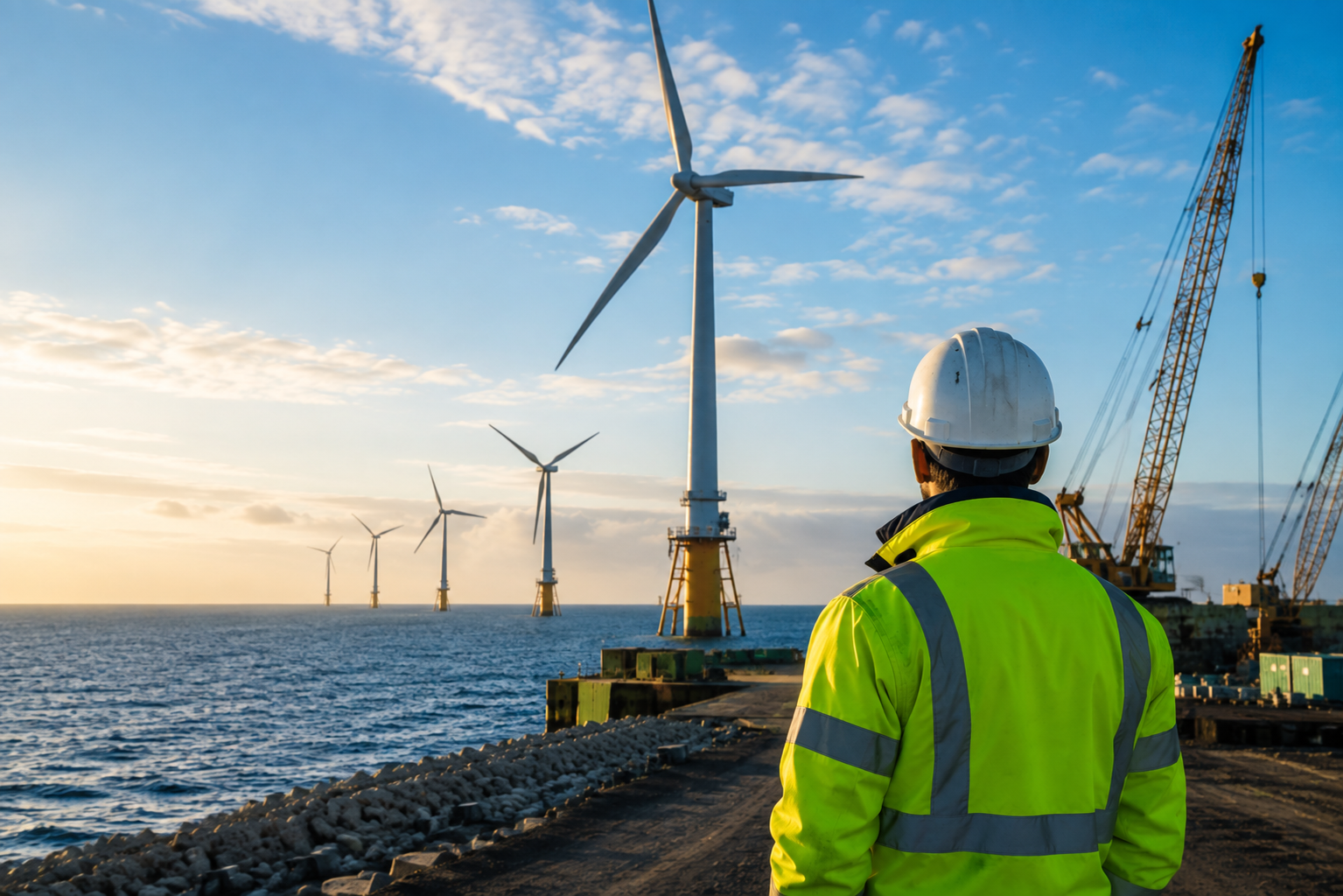
From major port upgrades and grid infrastructure to substations, civil engineering and mechanical installations, offshore wind is becoming one of the most significant drivers of construction and engineering activity across Ireland and Europe. Here's why construction professionals should be paying attention.
Offshore Wind Is No Longer a Future Industry
Not long ago, offshore wind felt like something happening elsewhere.
Most of the headlines came from countries like Denmark, the Netherlands and the UK, while Ireland's construction sector remained focused on housing, commercial developments, roads and pharmaceutical facilities.
Today, that picture is changing.
Governments across Europe are investing billions into renewable energy infrastructure as they work towards ambitious climate targets, improve energy security and reduce reliance on imported fossil fuels. Offshore wind has become a central part of that strategy.
For construction professionals, this isn't simply another energy trend. It's creating a new generation of large-scale infrastructure projects that require the same expertise already found across Ireland's construction industry.
Whether you're a Site Engineer, Project Manager, Quantity Surveyor, Mechanical Engineer or Health & Safety professional, offshore wind is creating opportunities that extend far beyond the turbines themselves.
Why Offshore Wind Matters More Than Ever
Several factors have accelerated investment in offshore wind over the past decade.
Energy Security
Recent global events highlighted the importance of producing energy closer to home. Countries across Europe have responded by accelerating investment in renewable energy sources that reduce dependence on imported fuels.
Climate Targets
Ireland and the European Union have committed to ambitious carbon reduction targets. Expanding offshore wind capacity is one of the key ways these targets can be achieved while meeting growing electricity demand.
Growing Electricity Demand
The demand for electricity continues to rise.
Electric vehicles, data centres, advanced manufacturing and the electrification of heating are all increasing pressure on existing electricity networks.
Offshore wind offers one of the largest scalable sources of renewable electricity available.
Technology Has Matured
Larger turbines, improved installation methods and advances in floating wind technology have made offshore projects more commercially viable than they were even a decade ago.
The result is a growing pipeline of projects across Europe, with Ireland increasingly becoming part of that story.
Ireland's Offshore Wind Opportunity
Ireland possesses one of Europe's greatest natural advantages.
With one of the world's richest offshore wind resources, particularly along the Atlantic coastline, the country has enormous long-term potential for renewable energy generation.
Government policy and industry investment are now focused on turning that potential into reality.
Several offshore wind projects are progressing through planning, consenting and development stages, particularly in the Irish Sea and along the south coast, while future floating offshore wind developments are expected to unlock even greater opportunities in deeper Atlantic waters.
However, offshore wind is about much more than what happens out at sea.
Every offshore wind project also requires significant construction activity onshore.
This includes:
-
New substations
-
Grid reinforcement projects
-
Underground cable routes
-
Port upgrades
-
Manufacturing facilities
-
Operations and maintenance bases
-
Temporary construction compounds
-
Access roads
-
Civil infrastructure
-
Environmental works
Many of these projects look remarkably similar to other major infrastructure schemes already being delivered across Ireland.
Offshore Wind Isn't Just About Turbines
One of the biggest misconceptions is that offshore wind only creates jobs for turbine technicians.
In reality, constructing an offshore wind farm involves hundreds of different disciplines.
Before a single turbine begins generating electricity, years of planning, engineering and construction have already taken place.
Projects often involve:
-
Marine surveys
-
Geotechnical investigations
-
Environmental assessments
-
Large-scale civil engineering
-
Heavy mechanical installation
-
Electrical infrastructure
-
High-voltage systems
-
Structural steel fabrication
-
Logistics planning
-
Commissioning
-
Operations planning
It is this combination of disciplines that makes offshore wind particularly relevant to professionals already working in construction.
Construction Professionals Already Have Transferable Skills
One of the reasons offshore wind is attracting attention is because many employers are looking for experience rather than industry-specific backgrounds.
Professionals who have worked on major infrastructure projects often possess highly transferable skills.
This includes experience gained in:
-
Data centres
-
Pharmaceutical facilities
-
Power generation
-
Utilities
-
Water and wastewater projects
-
Transmission infrastructure
-
Heavy industrial construction
-
Large commercial developments
-
Civil engineering projects
Project delivery, planning, health and safety, quality management and commercial control remain critical regardless of whether a project is a data centre or an offshore wind development.
Which Construction Roles Are Most In Demand?
Although every project differs, offshore wind developments regularly require professionals across a wide range of disciplines.
Civil Engineering
Civil Engineers help deliver enabling works, foundations, access roads, substations and associated infrastructure.
Mechanical Engineering
Mechanical Engineers support installation, commissioning and maintenance of mechanical systems across generation and supporting infrastructure.
Electrical Engineering
Electrical Engineers are involved in substations, cable installations, switchgear, testing, commissioning and grid connections.
Project Management
Large multidisciplinary projects require experienced Project Managers capable of coordinating contractors, budgets, programmes and stakeholders.
Quantity Surveying
Commercial management remains essential throughout procurement, contract administration and project delivery.
Planning
Project Planners help coordinate complex programmes involving multiple contractors and long construction timelines.
Health & Safety
Safety standards are particularly high across energy infrastructure projects, creating strong demand for experienced HSEQ professionals.
BIM and Digital Construction
As projects become increasingly complex, digital coordination and Building Information Modelling continue to play an important role.
Europe Is Setting The Pace
While Ireland's offshore wind sector continues to develop, Europe already provides a glimpse into what the future may look like.
Countries including:
-
Denmark
-
Germany
-
The Netherlands
-
Belgium
-
The United Kingdom
have invested heavily in offshore wind infrastructure over many years.
Alongside offshore generation itself, these countries continue investing in:
-
Grid expansion
-
New substations
-
Port regeneration
-
Manufacturing facilities
-
Battery storage
-
Energy transmission infrastructure
Many Irish construction professionals have already contributed to these projects while working across mainland Europe, particularly in mechanical and electrical disciplines.
As Ireland's own renewable energy sector grows, much of that experience becomes increasingly valuable back home.
Challenges The Industry Must Solve
Like every major infrastructure sector, offshore wind faces its own challenges.
These include:
Skills shortages
Demand for experienced construction and engineering professionals continues to outpace supply across many specialist disciplines.
Supply chain pressures
Global demand for specialist equipment and materials can create longer lead times.
Grid infrastructure
Generating renewable electricity is only part of the challenge. Significant investment is also required to strengthen electricity transmission networks.
Long project timelines
Major offshore developments often take years to move from planning to construction, requiring long-term collaboration across multiple organisations.
Despite these challenges, long-term investment continues across both Ireland and Europe.
What Does This Mean For Construction Professionals?
Offshore wind should not be viewed simply as another employment sector.
It represents a long-term shift in the type of infrastructure being delivered across Europe.
The projects may be different, but many of the skills required remain familiar.
Construction professionals with experience in complex project delivery, major civil engineering works, M&E installation, commercial management and health & safety are already building capabilities that align with future renewable energy projects.
For graduates entering the industry today, offshore wind may become one of the defining sectors of their careers.
For experienced professionals, it presents another opportunity to apply established expertise to one of the fastest-growing areas of construction.
Looking Ahead
Ireland's construction industry has continually evolved.
From housing booms and commercial developments to pharmaceutical facilities, data centres and major transport infrastructure, each decade has brought new priorities.
Renewable energy appears set to become one of the next major chapters.
As offshore wind projects continue progressing, they will drive investment not only at sea but across ports, substations, manufacturing, utilities and supporting infrastructure throughout Ireland.
For construction and engineering professionals, that means new projects, new challenges and new opportunities to develop careers within one of Europe's fastest-growing infrastructure sectors.
The turbines may capture the headlines, but it is the construction industry that helps make offshore wind possible.
Frequently Asked Questions
What is offshore wind construction?
Offshore wind construction involves designing and building the infrastructure needed to generate electricity from wind turbines located at sea. This includes foundations, substations, cable routes, ports, grid connections and onshore support facilities.
What construction jobs support offshore wind projects?
Typical roles include Civil Engineers, Site Engineers, Mechanical Engineers, Electrical Engineers, Project Managers, Quantity Surveyors, Health & Safety professionals, Project Planners, Commissioning Engineers and BIM specialists.
Is offshore wind growing in Ireland?
Yes. Ireland has significant offshore wind potential, particularly in the Irish Sea and the Atlantic, with several projects progressing through development alongside investment in electricity networks and supporting infrastructure.
Do I need offshore wind experience?
Not necessarily. Many employers value experience gained on major infrastructure, utilities, power, pharmaceutical, industrial and data centre projects, as these skills are often transferable to offshore wind developments.
Get in Touch
Want to find out how we can help your business grow? Get in touch with us by sending a message through this form!Related Articles
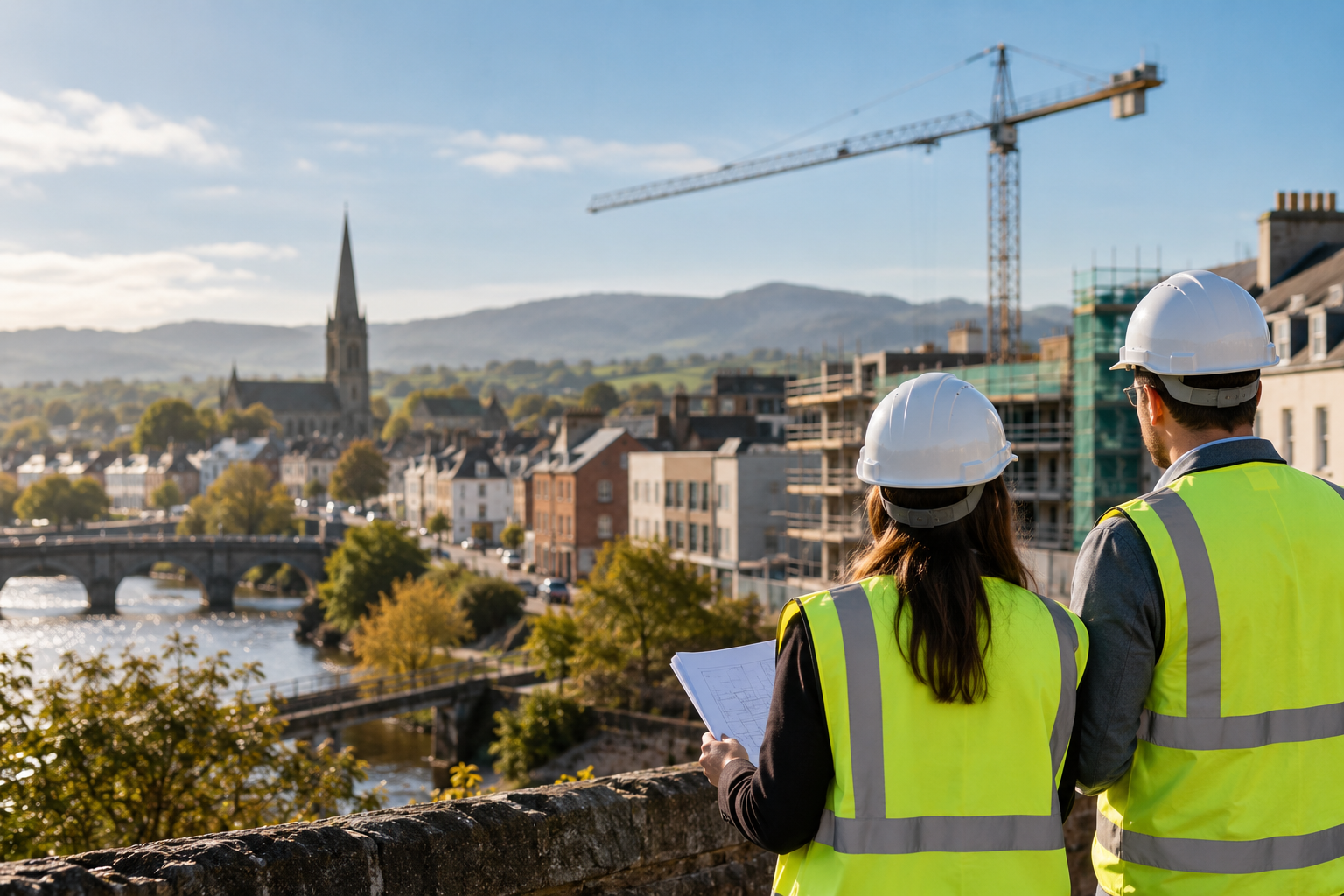
119 Irish Regeneration Projects: Where Regional Construction Demand Could Grow Next
When people talk about the next wave of construction in Ireland, attention usually goes to the same places. Housing. Dublin. Data centres. Pharmaceutical projects. Major infrastructure. But one of the...
 Cathal McKeever
3 Must-Ask Questions to End Your Construction Interview
3 Must-Ask Questions to End Your Construction Interview When it comes to construction interviews, most candidates spend all their time preparing to answer tough questions. While that’s important...
Cathal McKeever
Are Construction Professionals Expected to Sacrifice Too Much?
Are Construction Professionals Expected to Sacrifice Too Much? Long hours. Long commutes. Constant pressure. Time away from family. ...
 Fionn Mac Néill
Are Data Centres the Golden Ticket? The Truth Behind Ireland's Most Talked-About Construction Sector
Are Data Centres the Golden Ticket? Walk into almost any construction site canteen, recruitment office, or industry event in Ireland today, and you'll hear the same conversation. ...
 Ryan Kieran
Are Your Construction Skills More Valuable Than You Think?
You'd Likely Be in Strong Demand Right Now When was the last time you stopped to think about your career? For most construction professionals, the answer is probably "not recently." Betwe...
 Stephen Nugent
Balancing Commute, Site Location & Career Growth in Ireland: Are You Optimising Your Construction Career?
The Decision That Can Shape Your Entire Construction Career It's Monday morning. Your alarm goes off at 5:15am. By 6am you're on the M50, heading towards a project that's over 90 minutes away. You tel...
Stephen Nugent
Breagh Recruitment: 10 Years in Construction Recruitment
Breagh Recruitment: 10 Years in ConstructionRecruitment – My Journey This October 2025, Breagh Recruitment turns ten and I couldn’t be prouder. But our story started long before the f...
Cathal McKeever
Breagh Recruitment 2025: A Year of Growth, Grit and Milestones
Breagh Recruitment 2025: A Year of Growth, Grit and Milestones As 2025 comes to a close, it’s a natural time to pause, reflect, and take stock of just how far Breagh Recruitment has come not jus...
Cathal McKeever
Breagh Recruitment Celebrates Excellence at the Irish Construction Industry Awards 2025
Breagh Recruitment had the privilege of attending the Irish Construction Industry Awards 2025 at the Convention Centre Dublin. It was a memorable even...
Cathal McKeever
Built by Humans, Run by Robots: The Engineering Wonder That Is Yangshan Port
Built by Humans, Run by Robots: The Engineering Wonder That Is Yangshan Port At Breagh, we live and breathe construction and engineering. But every now and then, we come across a project that makes ev...
Cathal McKeever
